
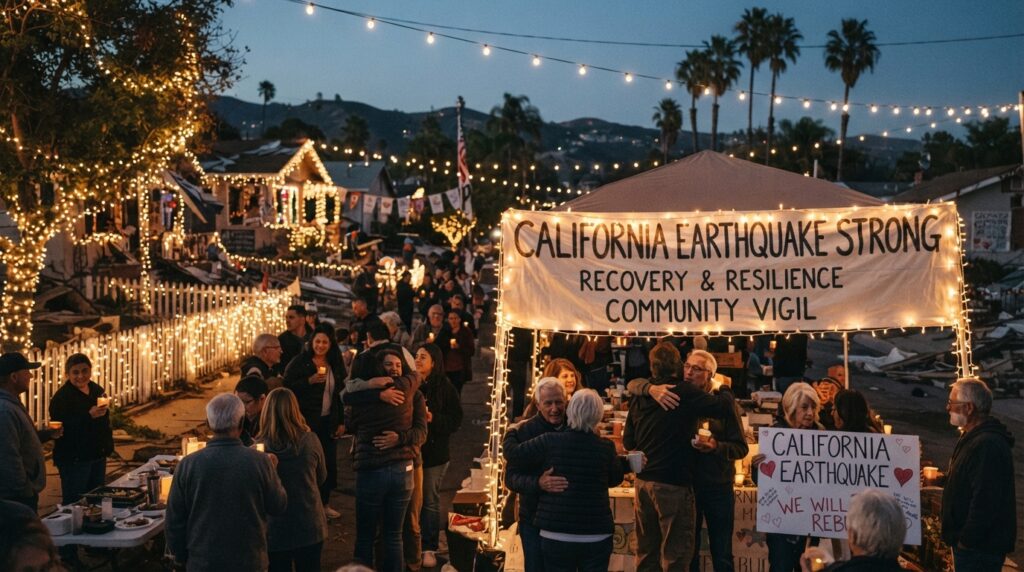
A magnitude 5.1 earthquake struck San Benito County late Thursday night, and within hours the searches that spiked were not about fault lines. They were about emergency kits, power outages, and how to keep a house lit and calm if the grid goes down. That reaction is the useful part. A moderate quake roughly 25 miles from Salinas rarely causes the damage people picture, but it is the cheapest possible reminder to fix the gaps in your own blackout plan before a bigger one arrives.
Key Takeaways
- A magnitude 5.1 earthquake hit about 6 miles northwest of Pinnacles in San Benito County at 10:49 p.m. Thursday, at a depth of roughly 4.2 miles, according to USGS reporting.
- The most likely household disruption after a quake this size is not structural damage. It is a gas leak or a power outage.
- Refrigerated food stays safe for about four hours if you keep the door closed (Ready.gov). A half-full freezer holds roughly 24 hours and a full freezer about 48 (American Red Cross).
- Flashlights are essential and also poor area lighting: harsh, directional, and battery-hungry. Battery operated LED string lights give long, soft, low-draw light for hallways and living rooms.
- The most underrated prep item is a calm, evenly lit room for children. That is a lighting decision, not a gear decision.
What Happened
On Thursday, November 19, 2026, at 10:49 p.m. local time, a magnitude 5.1 earthquake struck San Benito County in central California, according to the U.S. Geological Survey. The epicenter was roughly 6 miles (10 kilometers) northwest of Pinnacles National Park, at a depth of about 4.2 miles (6.7 kilometers). The agency initially estimated the quake at 5.4 before revising the magnitude down. Several aftershocks in the 2.5 to 3.4 range followed.
Key facts:
- Magnitude: 5.1 (initial estimate 5.4, later revised)
- Time: 10:49 p.m. local time, Thursday, November 19, 2026
- Location: about 10 kilometers northwest of Pinnacles, San Benito County
- Depth: roughly 4.2 miles (6.7 kilometers)
- Reported damage: none issued in the first hours
Residents across the Central Coast, from Salinas outward, reported feeling the shaking. No damage reports were issued initially, which is typical for a moderate quake at this depth.
Why This Matters for California Households
A 5.1 is not a catastrophe. It is a rehearsal.
The realistic risk from a quake this size is rarely a collapsed wall. It is the secondary stuff: a gas line that starts leaking, a breaker that trips, a neighborhood that loses power for six to twenty-four hours. Utility crews get stretched thin, traffic lights fail, and the first hour after dark is when most households discover they own one working flashlight and no plan.
Here is the gap. Most people prepare for the earthquake and forget the outage that follows. Food safety is where that shows up fastest. Per Ready.gov, an unopened refrigerator keeps food cold for only about four hours. The American Red Cross puts a half-full freezer at roughly 24 hours and a full freezer at about 48. If you do not know those numbers before the outage, you either throw away hundreds of dollars of food or eat something you should not.
The second gap is light. Not having light, but having the wrong kind. That one gets its own section below, because it is the piece almost nobody plans for.
What Actually Belongs in a Blackout-Ready Emergency Kit
Skip the prepper fantasy. For a household in earthquake country, the kit that matters is small, boring, and organized in one place you can reach in the dark. Prioritize:
- Water: one gallon per person per day, three days minimum
- Food: shelf-stable, no cooking required
- Light: at least two independent lighting sources per room you will occupy
- Power: a charged power bank, plus spare batteries in the sizes your devices actually use
- Safety: a gas shut-off wrench, a fire extinguisher, a first-aid kit
- Information: a battery or hand-crank radio, since cell networks congest after a widely felt quake
- Comfort: blankets, medications, pet supplies, and something to occupy kids
Then check the two things that quietly ruin most kits: expired batteries and a flashlight you never tested. A kit you have never opened is a kit you do not have.
The Lighting Problem Nobody Plans For
Here is the part that gets overlooked every time. Flashlights are essential, and they are also bad at lighting a room.
A flashlight is directional. You point it at one thing and everything behind it goes black. It is harsh enough to wreck both your night vision and your mood. And it draws battery hard, so a single flashlight left on through a long evening becomes a battery-eating contest you eventually lose. In a real outage that stretches past midnight, families start rationing light, which is exactly when a house begins to feel unsafe.
Battery operated LED string lights solve a different problem than a flashlight does. They are not a replacement for a flashlight. They are the thing that turns a dark house back into a livable one:
- Low draw. LED string lights sip power compared with a flashlight on high, so the same set of batteries lasts far longer.
- Safe to leave on. LEDs run cool, so they carry none of the heat risk of a candle or an older bulb. No open flame in a house that may have a gas leak.
- Soft and even. Wrapped along a hallway or draped across a living room, they light the space instead of stabbing at it.
- Set and forget. Timer and remote models mean you are not managing switches in the dark.
If you want to see the category, the Koopower battery operated fairy lights collection is built around exactly this kind of flexible, low-power use. For a hallway or living-room setup during an outage, a timer-based set like the Battery Powered Outdoor Fairy Lights with Timer works well, because you can hang it once and let it run.
How to Use Battery Operated String Lights During a Power Outage
Placement matters more than brightness. Three rules:
- Light the paths, not the rooms. Run lights along hallway walls, stair edges, and the route to the bathroom. You want to see where you are walking without flooding the whole floor.
- Keep one calm hub. Pick one room, usually the living room, and make it the lit, warm, comfortable center of the house. Everyone gathers there, and nobody stumbles around in the dark.
- Store lights without batteries. Keep the batteries out until you actually need them. Batteries left inside a device for months are how you end up with a corroded battery box when you need light most.
Two safety notes worth repeating: never use candles as your outage lighting if there is any chance of a gas leak, and keep all lighting away from any area where you smell gas.
Helping Kids Feel Safe When the Lights Go Out
This is the part parents feel most and plan least.
For a child, a blackout is not a logistics problem. It is a scary one. The dark is total, the house sounds different, and they cannot tell whether the adults are worried. What calms that down is not more equipment. It is a room that looks halfway normal: soft, warm, evenly lit, with people in it.
A string of warm lights along the living room wall does more for a nervous kid than a brighter flashlight ever will, because it changes the room from “emergency” back to “evening.” That is the real argument for battery lights over flashlights in a family home. It is not about lumens. It is about the room not feeling like a crisis.
The practical version: give each child a small job during the outage, like holding the light, finding the blankets, or checking on the pet. A job is a calm-down tool. So is keeping the lights and the snacks in the same room, so nobody has to wander.
What to Do Now
Do these in order. The first one takes ten minutes.
- Today: test every flashlight and check every battery. Replace anything dead or leaking.
- This week: move your supplies into one reachable place. Two lighting sources per occupied room, a power bank, and a gas wrench.
- This week: learn your food-safety numbers. Four hours for a closed fridge (Ready.gov), 24 hours for a half-full freezer, 48 for a full one (Red Cross). Tape them inside a cabinet door.
- This month: add battery operated string lights as your area-lighting layer, and store them without batteries.
- This month: walk your family through a 60-second blackout drill. Where does everyone go, who grabs the lights, where is the radio.
Do NOT:
- Rely on candles for outage lighting, especially before you have ruled out a gas leak.
- Assume your phone flashlight is a plan. It drains the device you will need for information.
- Store batteries inside devices you leave sitting for months.
The Bigger Picture
California has had this rhythm for decades: a moderate quake shakes a region, nothing terrible happens, and everyone quietly forgets until the next one. The households that come through the real event well are rarely the ones with the most gear. They are the ones who turned a minor quake into a ten-minute prep task and then left it alone.
Last night’s quake was a free rehearsal. The next one will not send a reminder first.
Frequently Asked Questions
How long does food stay safe in a power outage?
An unopened refrigerator holds safe temperatures for about four hours, according to Ready.gov. A half-full freezer stays safe roughly 24 hours and a full freezer about 48, per the American Red Cross. Keep the doors closed and discard anything that has been above 40 degrees Fahrenheit for too long.
Are battery operated string lights safe indoors during an outage?
Yes. LED string lights run cool and use no open flame, which makes them safer than candles in a home that may have a gas leak. Keep them away from any area where you smell gas.
How long do battery operated string lights last in a blackout?
LED string lights draw far less power than a flashlight on high, so a single set of batteries typically runs much longer. Exact runtime depends on battery type and brightness setting, and timer models can stretch it further by only running part of the time.
What is the first thing to do after an earthquake?
Check yourself and your family for injuries, then check for gas by smell before turning anything on or off. If you smell gas, leave and call from outside. Only then worry about food, light, and comfort.
Should I use candles if I do not have battery lights?
No, not if there is any chance of a gas leak after a quake. Use a flashlight for tasks and battery powered LED lights for area lighting.
Final Answer
The San Benito County earthquake was mild, which is exactly what makes it useful. The likely disruption in your home is not damage. It is a few dark hours and a fridge you cannot open. Prepare for that: keep the food-safety numbers handy, keep two lighting sources per room, and swap your “one harsh flashlight” plan for soft, low-power battery operated string lights that keep a room livable. Start with the Koopower battery operated fairy lights collection and build the calm version of a blackout now, while the lights are still on.